


02. Configuration
Configuration is intentionally simple. Enable Tailwind CSS for your website and select the version you want to use.
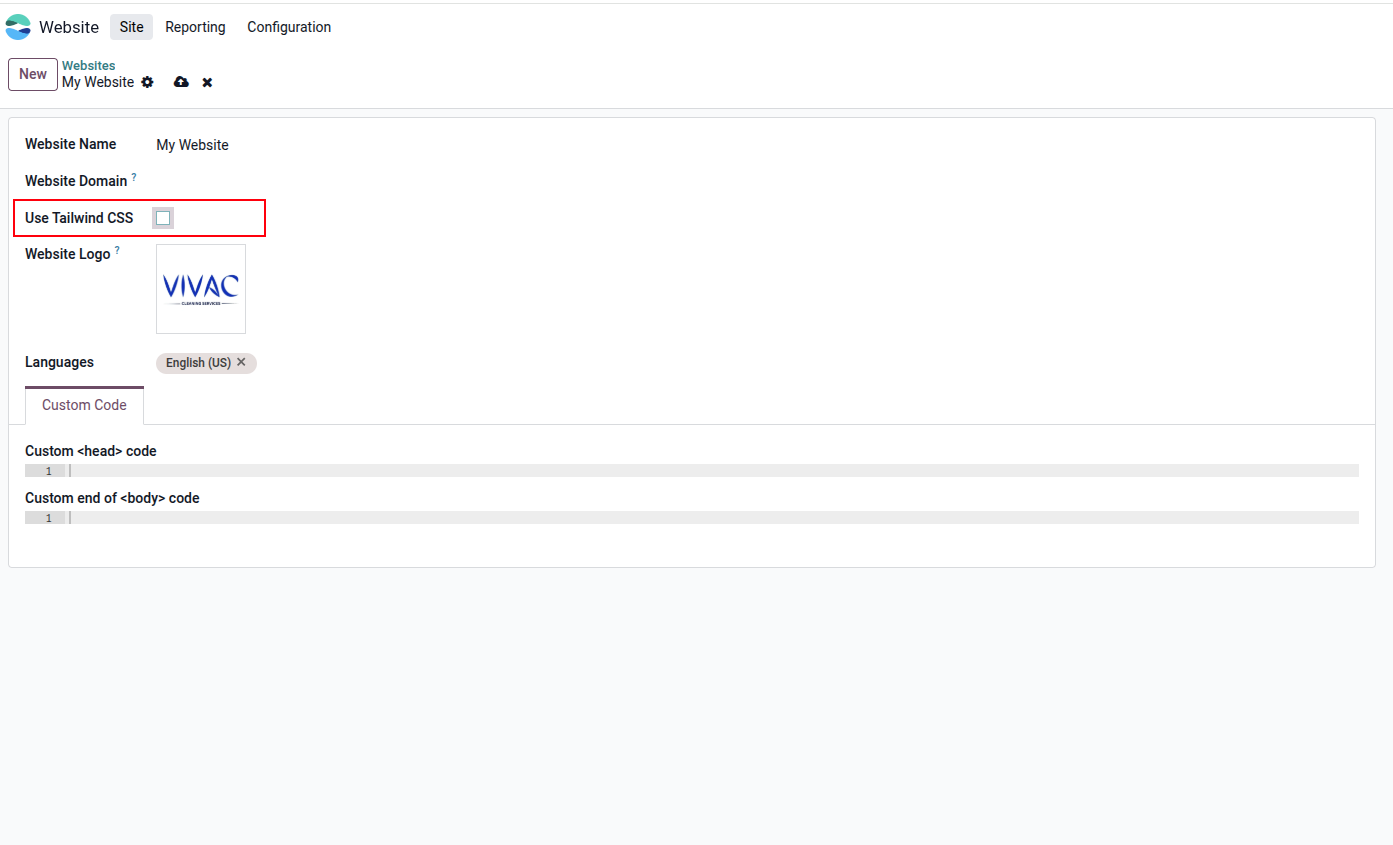
Enable Tailwind CSS
Open your Odoo website configuration and enable Use Tailwind CSS . This activates Tailwind CSS support for the selected website.
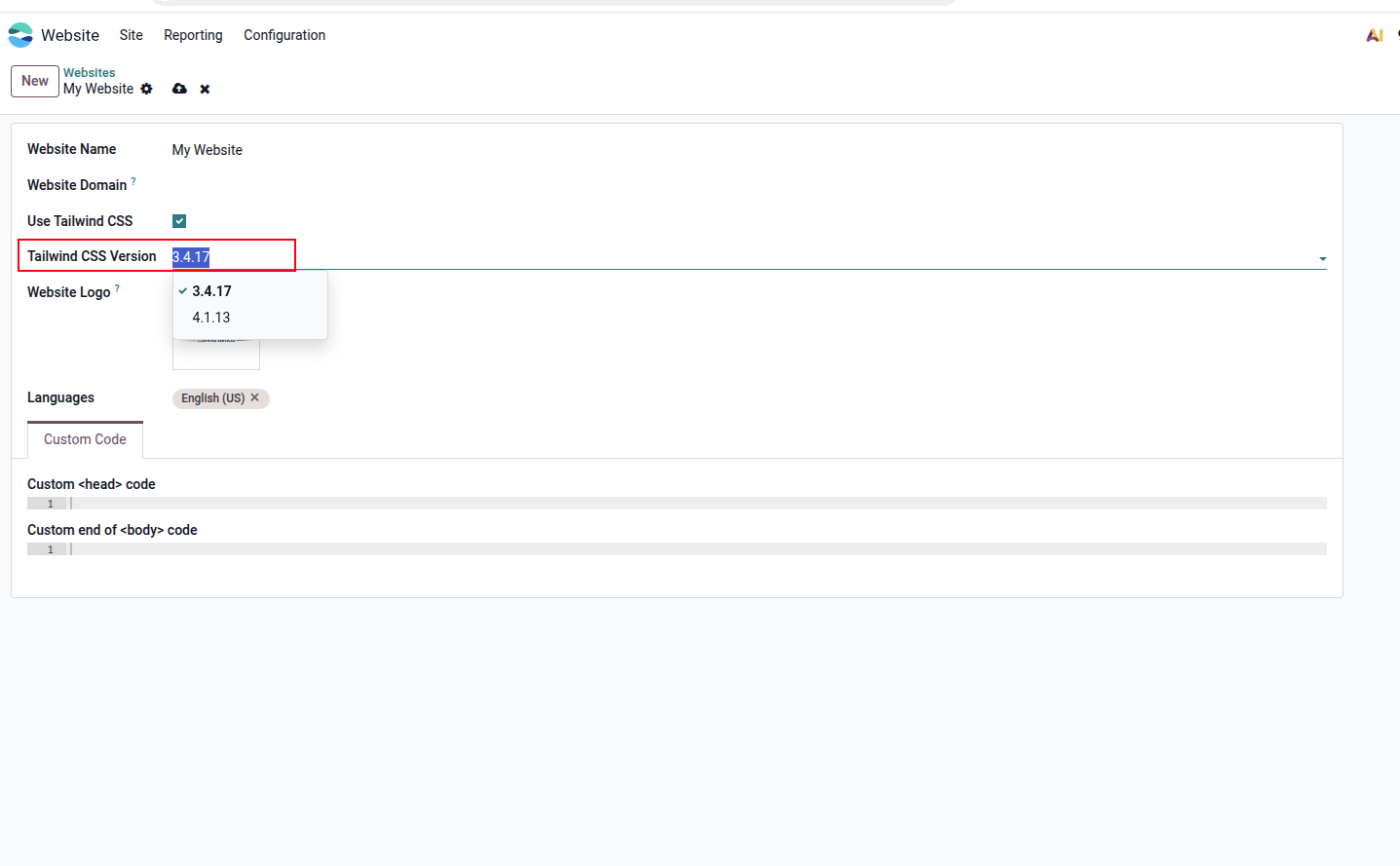
Select the Tailwind CSS Version
Select the Tailwind CSS version your website should use. The configuration shown supports versions such as 3.4.17 and 4.1.13 .
03. How it Works
Once configured, the module bridges the gap between Tailwind HTML and Odoo's Bootstrap-based website environment.
Build Your Website with Tailwind
Copy HTML containing Tailwind CSS utility classes into the Odoo website editor. The module makes the required Tailwind styles available so those classes can be rendered by the website.
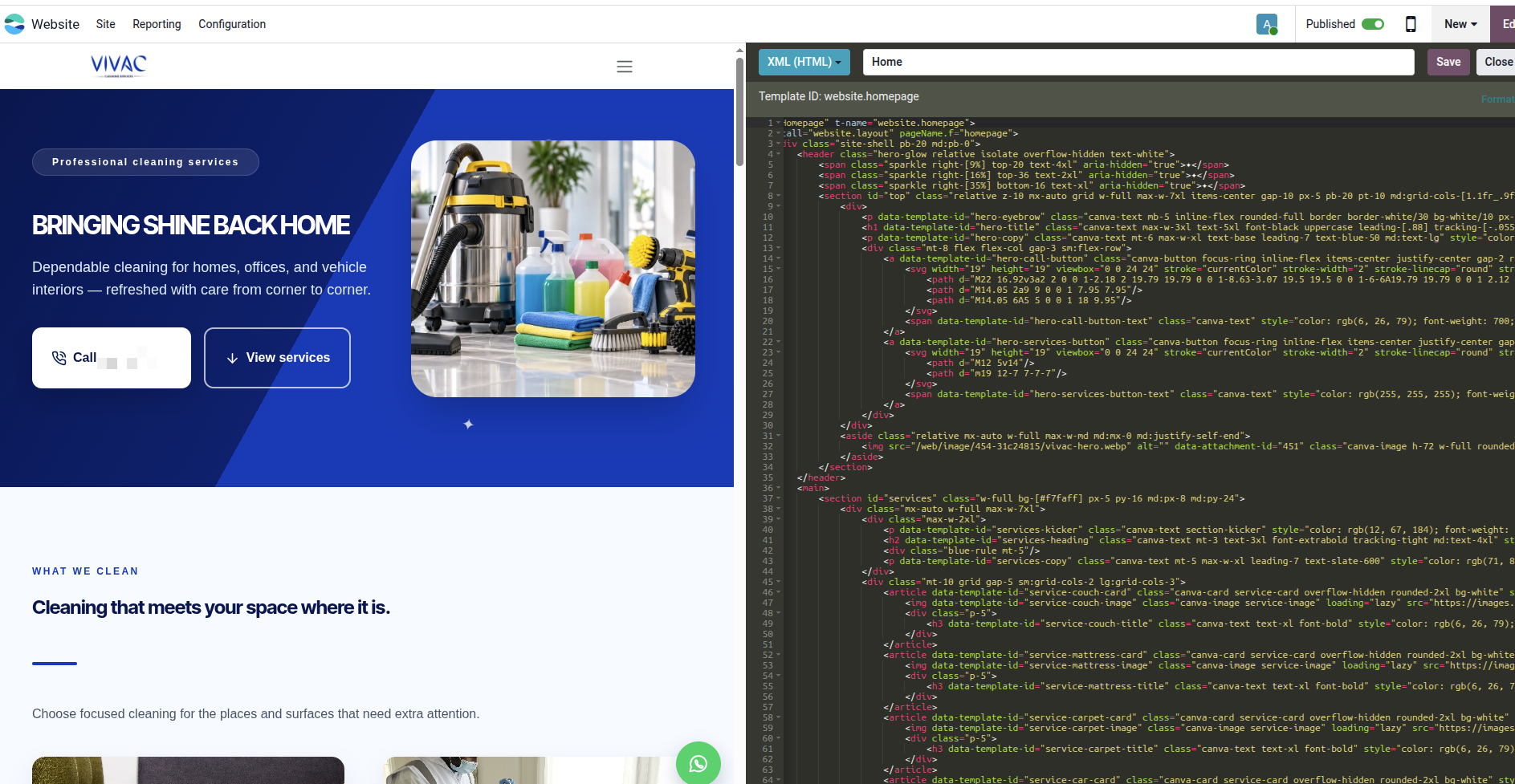
This lets you use Tailwind-based HTML designs and templates directly in Odoo instead of manually converting every utility class to Bootstrap.
You do not need to configure a separate Tailwind build environment for every Odoo installation. Install the module, select your preferred version and work directly inside your Odoo website.
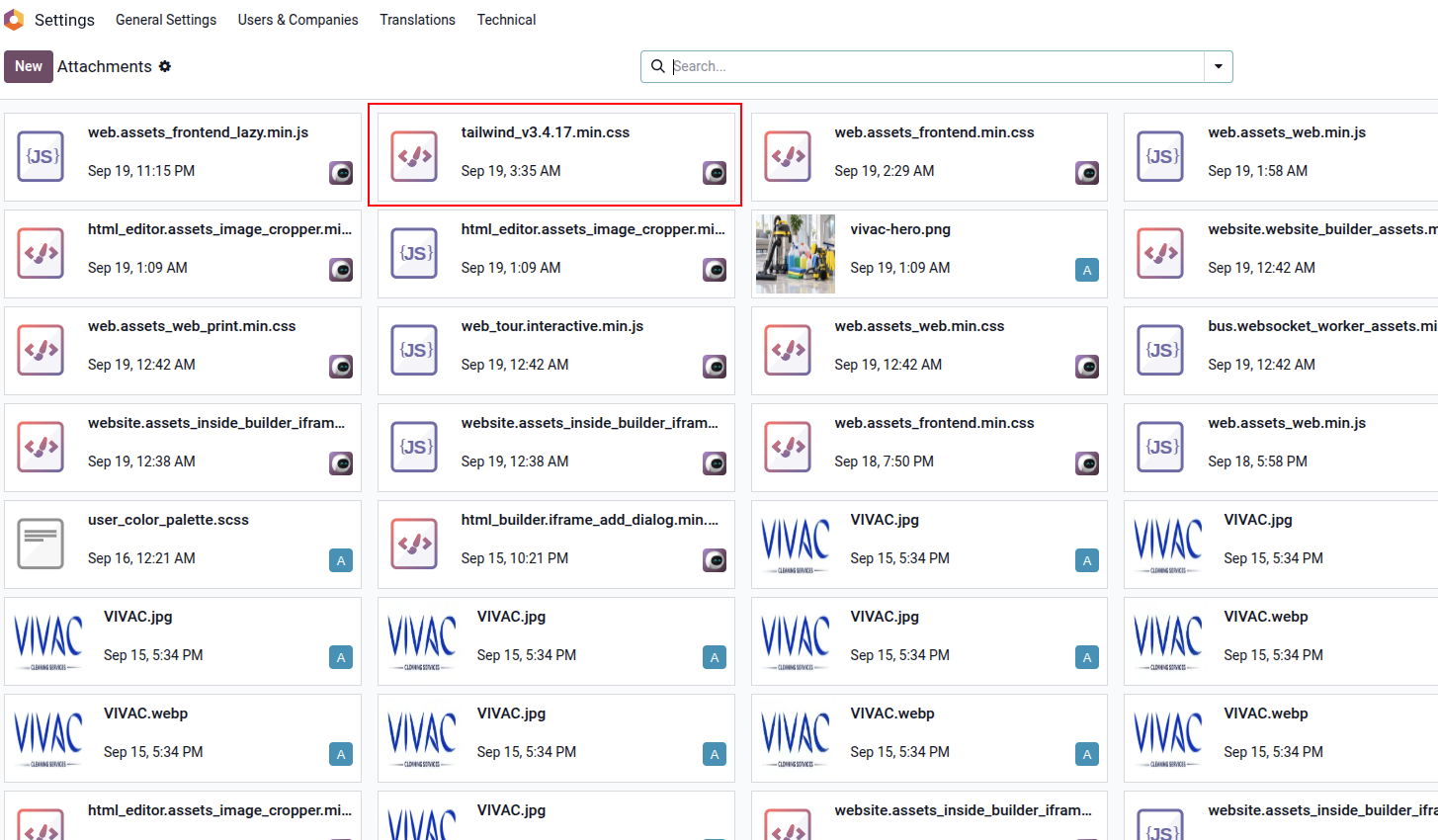
The Generated CSS is Automatically Attached
After Tailwind classes are detected and the stylesheet is generated, the module creates a CSS attachment inside Odoo. The generated stylesheet is then automatically injected into the website as a CSS source.
This means the generated styles become part of the website's normal asset flow, allowing Tailwind-based content to render without requiring a separate Tailwind build process on the server.
Bootstrap provides a collection of predefined components and utilities. Tailwind CSS takes a different approach: it gives you low-level utility classes that let you build your own components from the ground up.
This opens Odoo website design to far more possibilities. You are no longer limited to the visual patterns provided by a component library; you can reproduce highly customized interfaces and brand-specific designs directly in your Odoo website.
Behind the Scenes
The module follows a straightforward process: